INDIGO DESIGN WINNER 2025
INDIGO DESIGN WINNER 2025
INDIGO DESIGN WINNER 2025
INDIGO DESIGN WINNER 2025
INDIGO DESIGN WINNER 2025
INDIGO DESIGN WINNER 2025
INDIGO DESIGN WINNER 2025
INDIGO DESIGN WINNER 2025
Everyday life in the focus of climate
/by Marina Braem
2025 Freelancer Winner
Silver Winner in Infographics for Graphic Design
Bronze Winner in Magazine & Newspaper Design for Graphic Design
Bronze Winner in Education for Social Change
Description
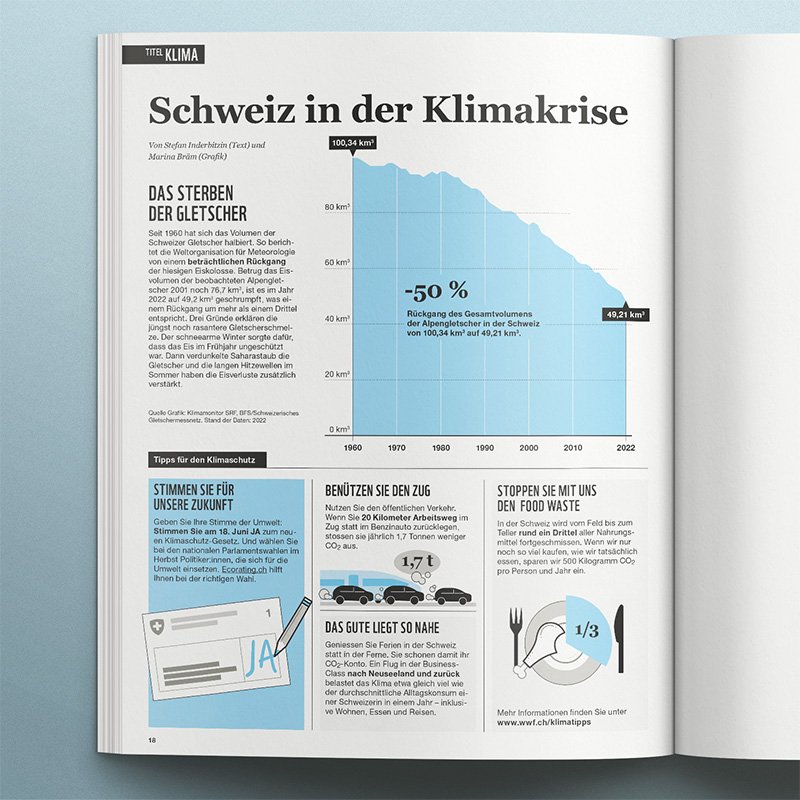
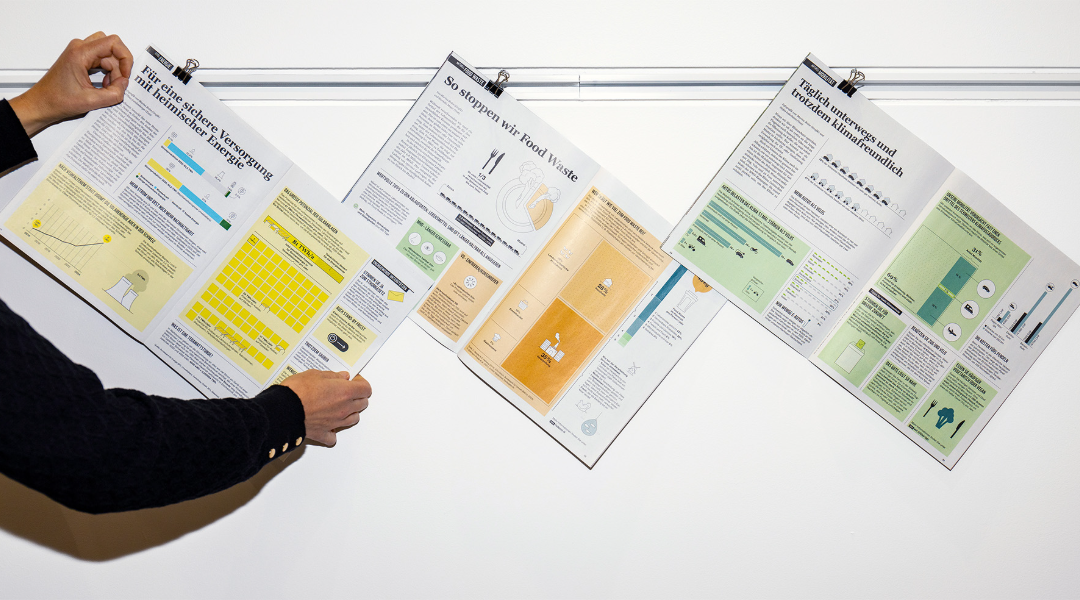
An infographic series for WWF Magazine Switzerland, 2024 This infographic series focused on everyday life and climate: mobility, food waste, and domestic energy. I visually put data, facts, and findings from the experts from the different subject areas in the context of how we use energy and resources in a readable, well-structured infographic presentation. The fact grid was central to implementing this series, which presented the information consistently and with a visual theme for each issue. The first issue of our facts collection focused on everyday mobility. Mobility is responsible for almost a third of Switzerland's climate footprint. Harmful greenhouse gases are emitted not only during car use but also during the manufacture and disposal of vehicles and infrastructure. The research also showed that more cars are used per household in Switzerland than bicycles. Switzerland is also not at the forefront of the switch to electric vehicles. And taking the train is cheaper, even for short and very long commutes. The second issue focused on the potential of domestic energy. Our electricity demand will continue to rise as electric cars replace petrol cars and heat pumps require electricity. The electricity mix should be different by 2035 at the latest. It should come from renewable sources, be environmentally friendly, domestically produced, and be sufficient in winter. The expansion of renewable energy will be significant in the future, as will efficiency. The third issue focused on food waste. In Switzerland, we lose 2,8 tons annually, corresponding to 150'000 truckloads. One of the main concerns was to point out and clarify food's expiration dates. Many days, certain foods remain edible beyond their expiration date. For example, pasta can be stored up to 360 days past its expiration date. Yogurt and quark can be kept for 14 days after their best-before date. The insight into the bin and green waste study in 33 Swiss municipalities was also revealing. It shows that we throw away a lot of cooked food. And we also experience significant losses during food processing. For example, when laying hens no longer produce enough eggs, they are killed and used for biogas production. The last issue focused on melting the Alpine glaciers on a single page. Since 1960, the volume of Swiss glaciers has halved, and the World Meteorological Organization reported a considerable decline in the local ice giants.