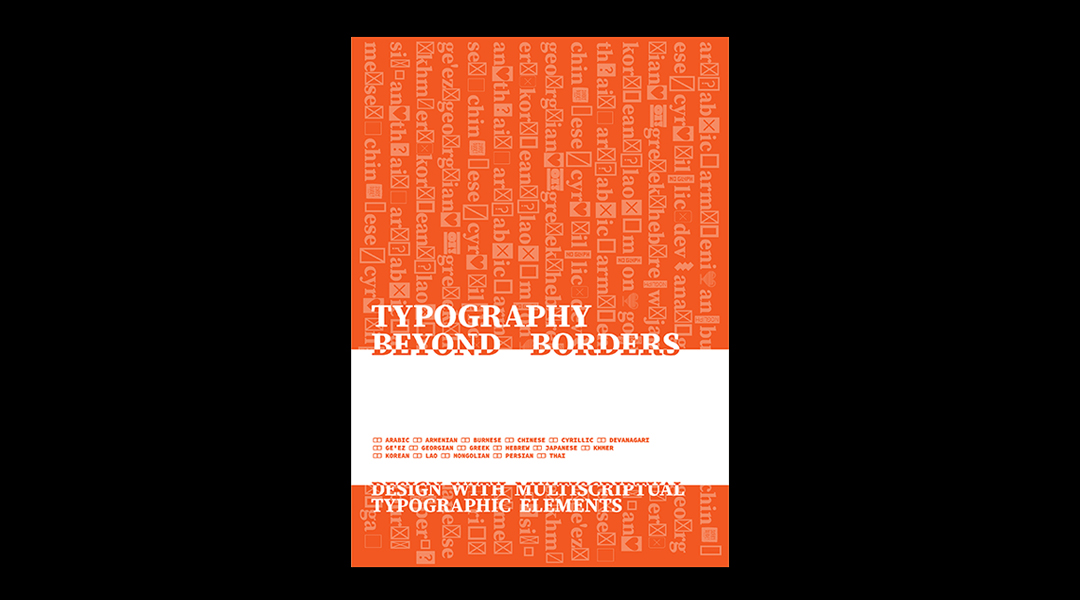
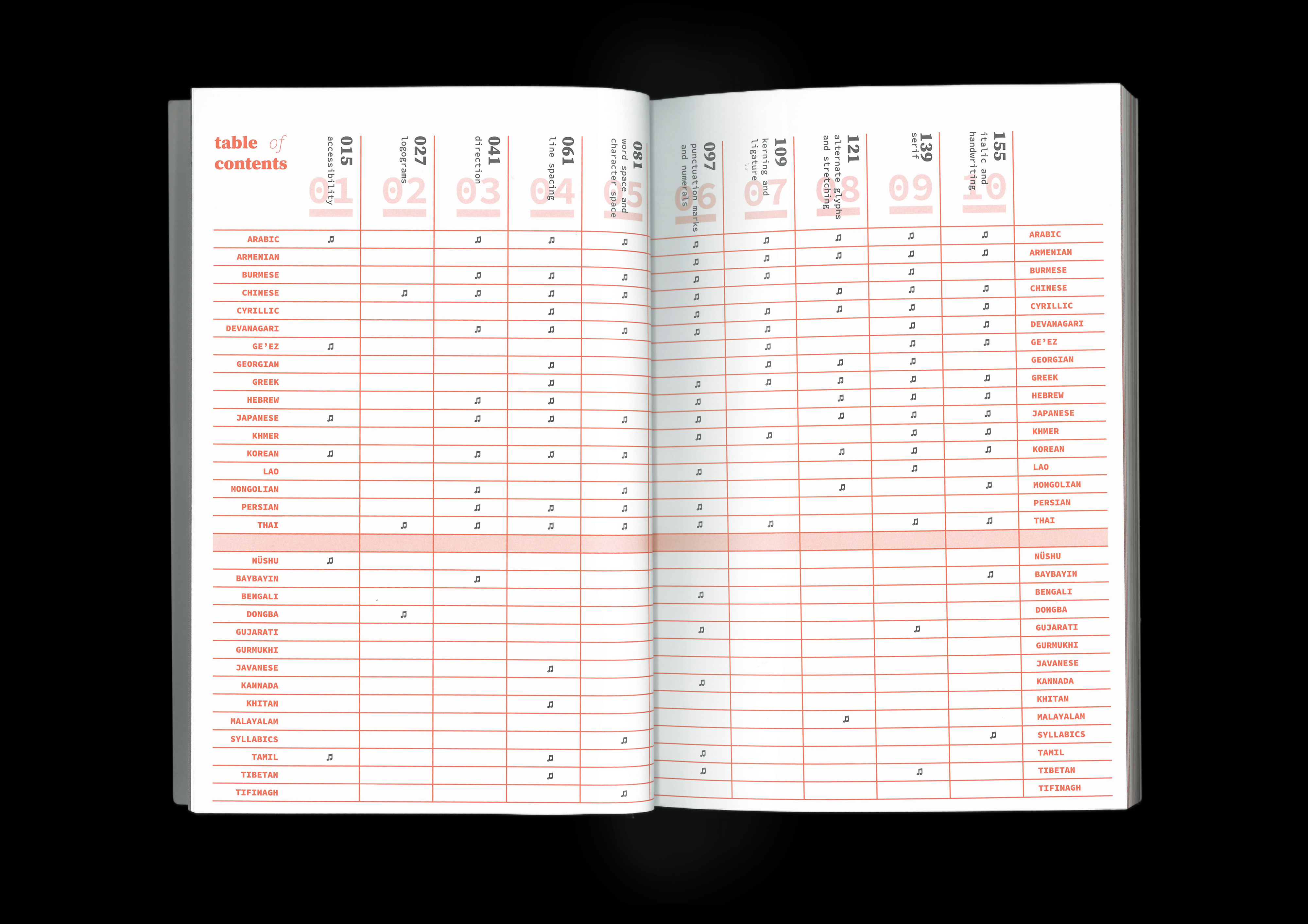
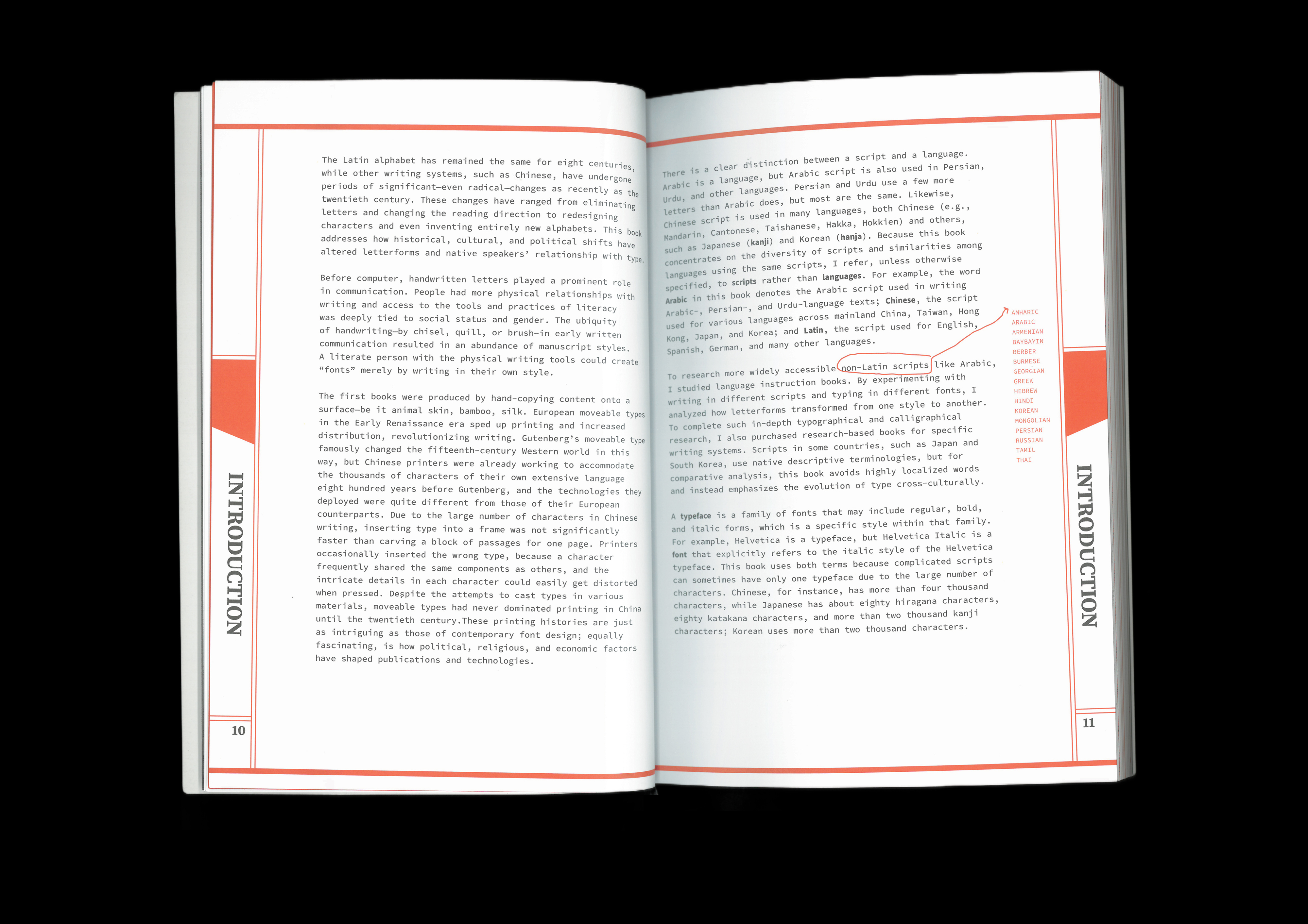
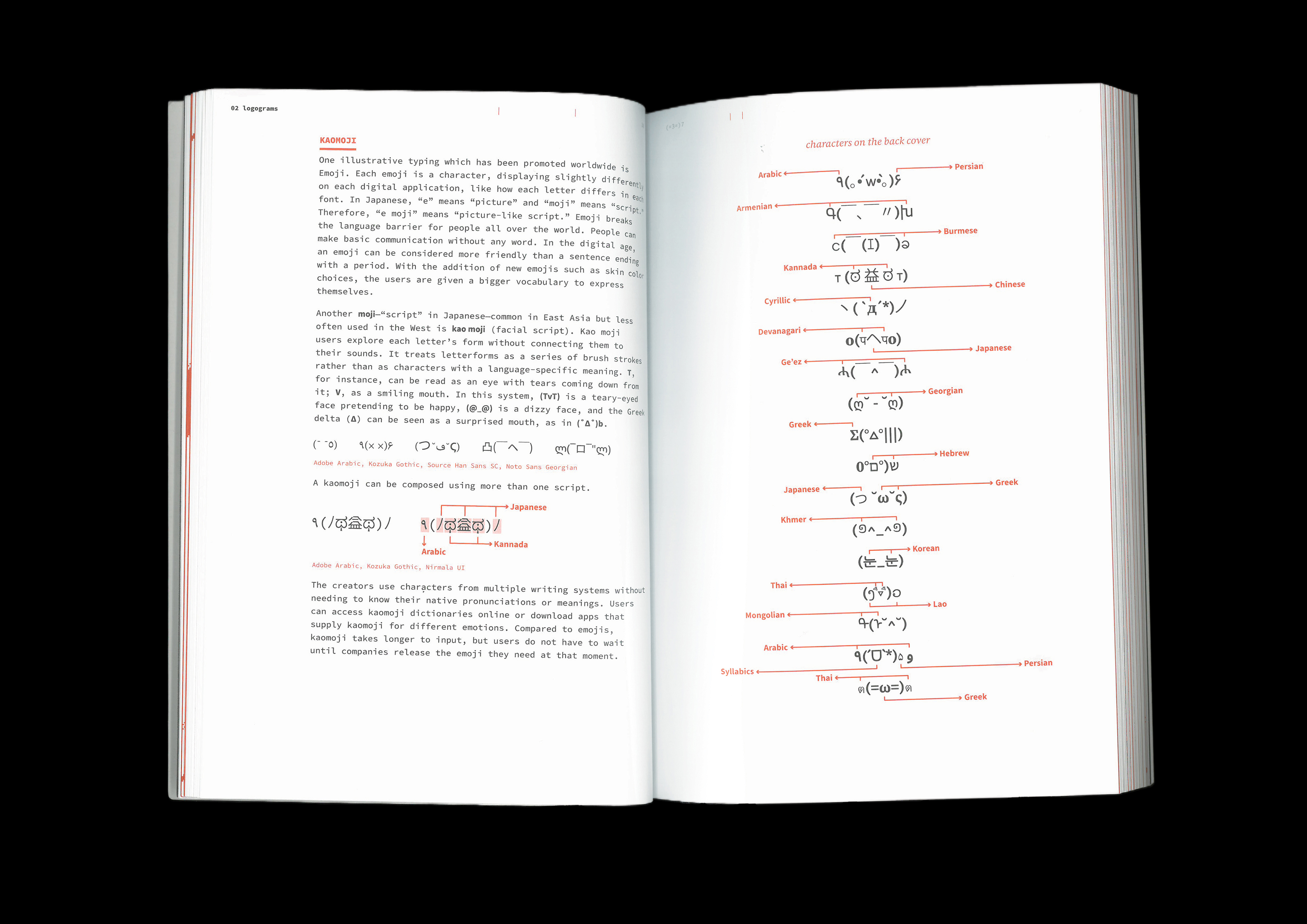
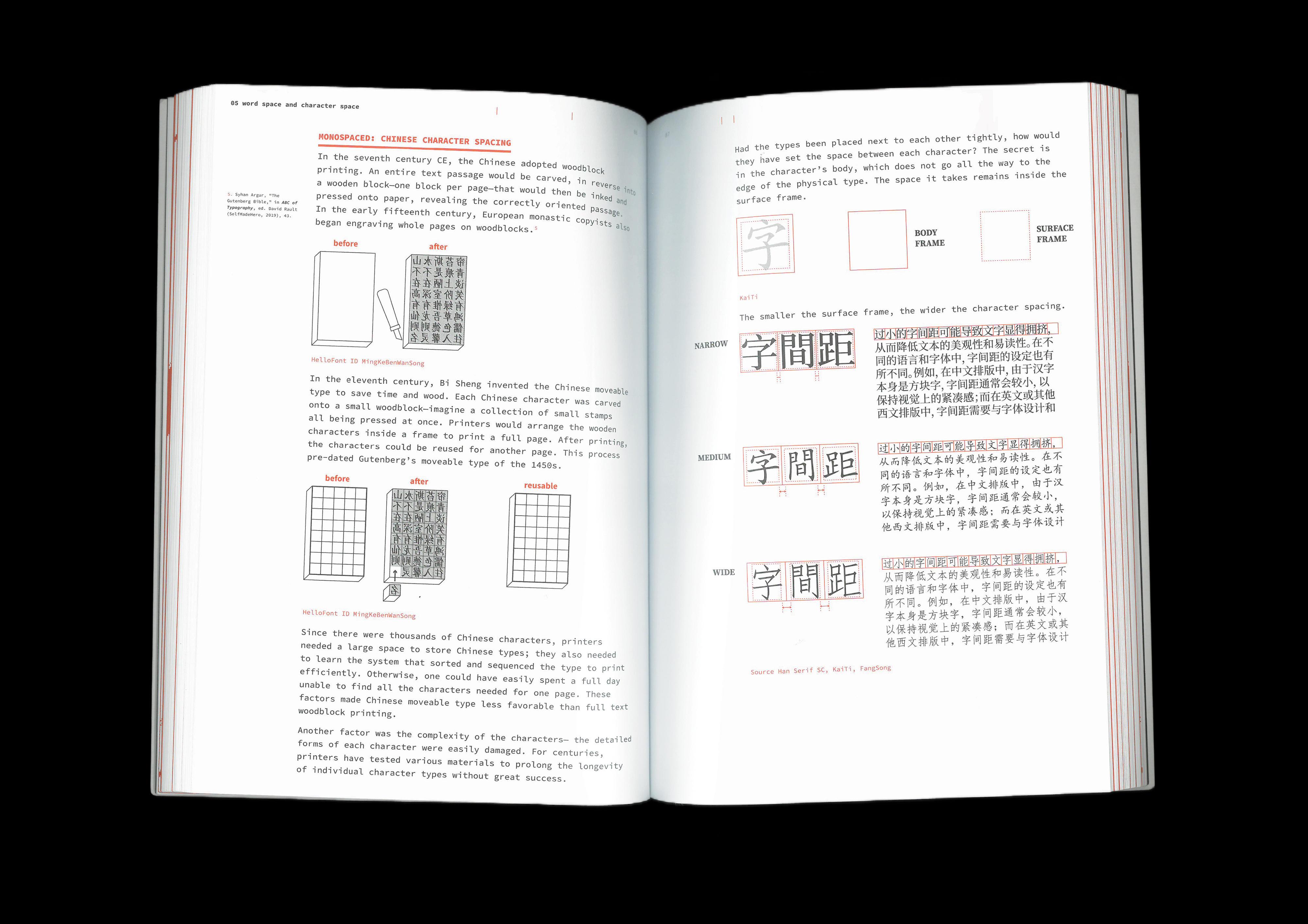
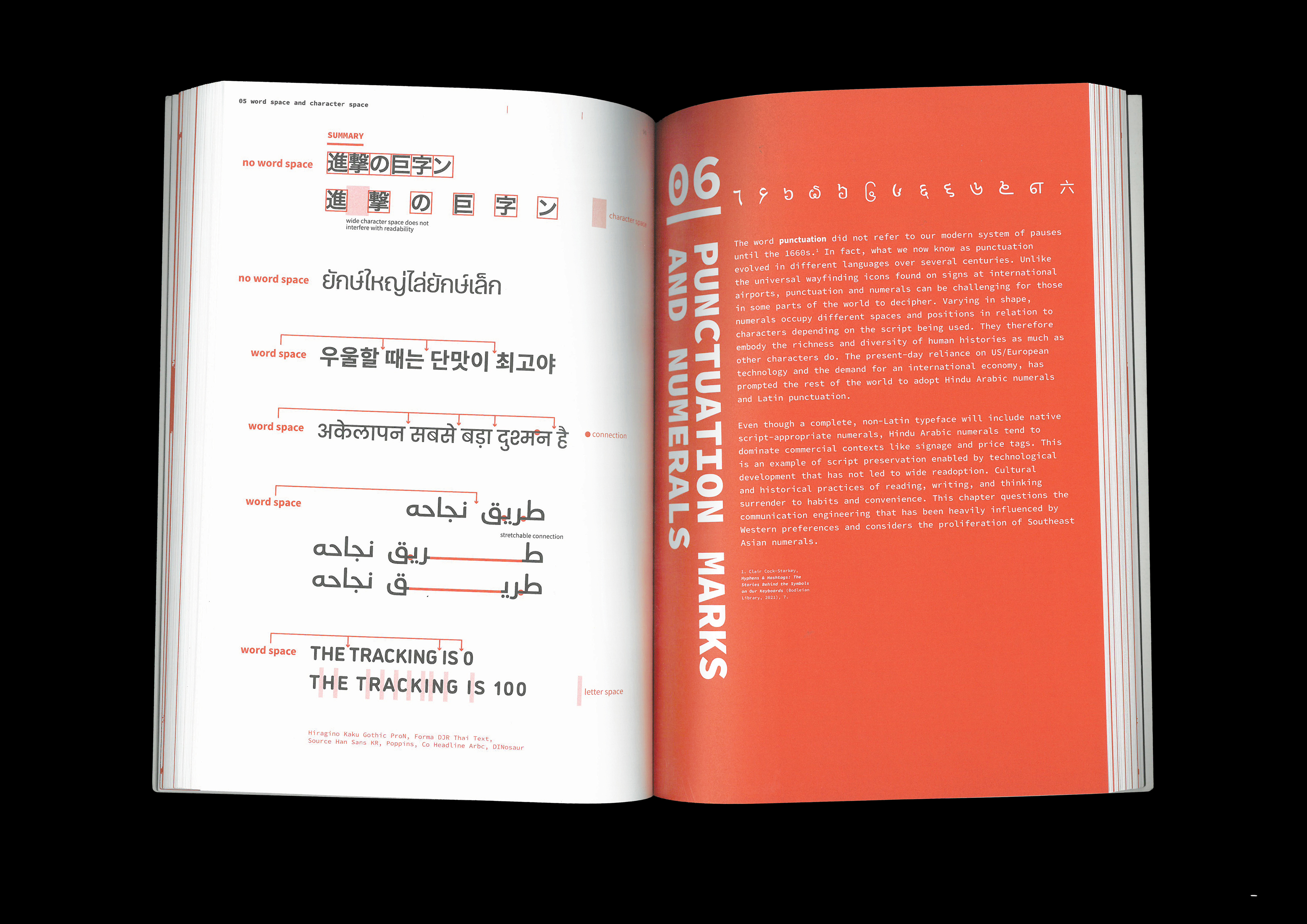
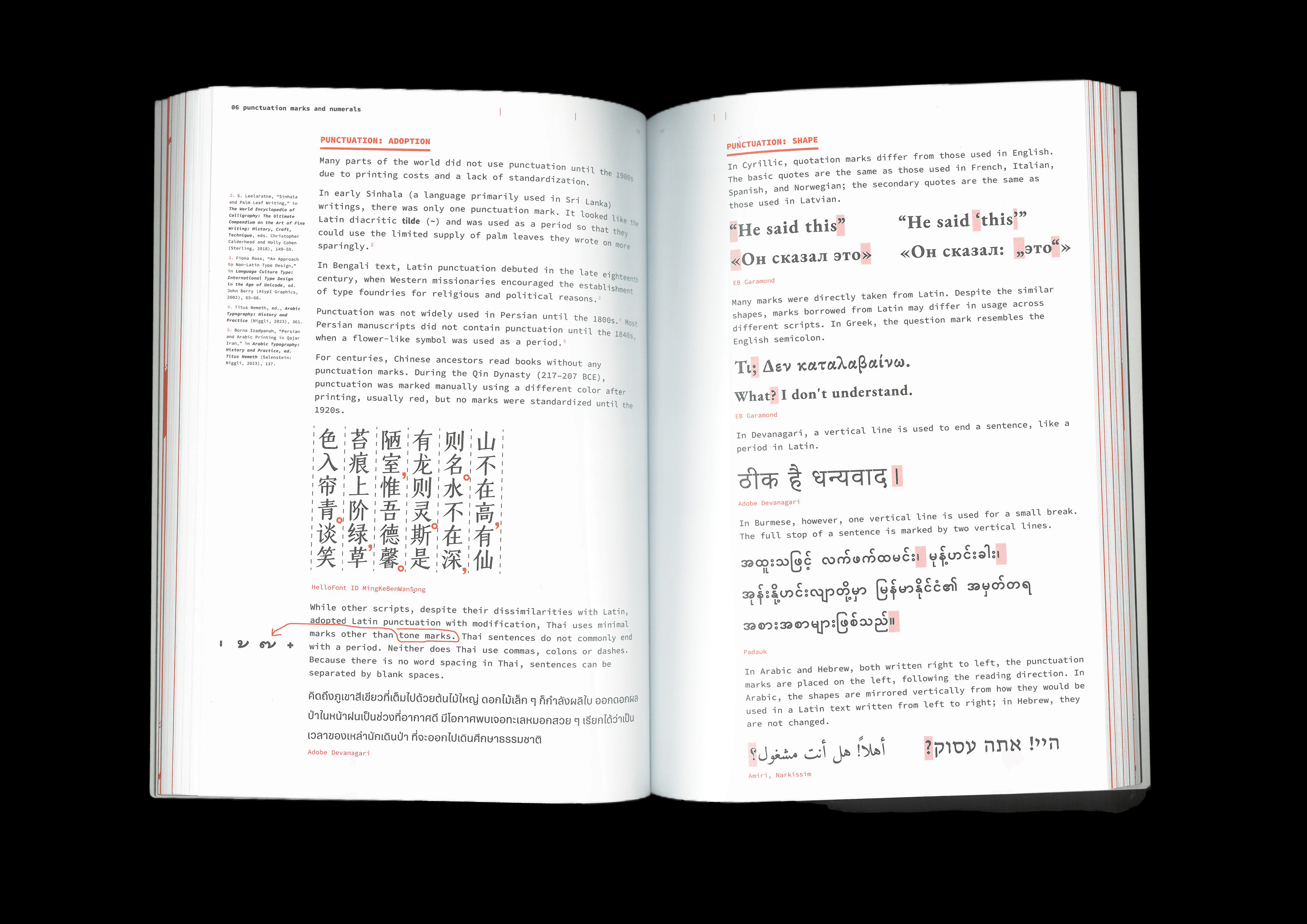
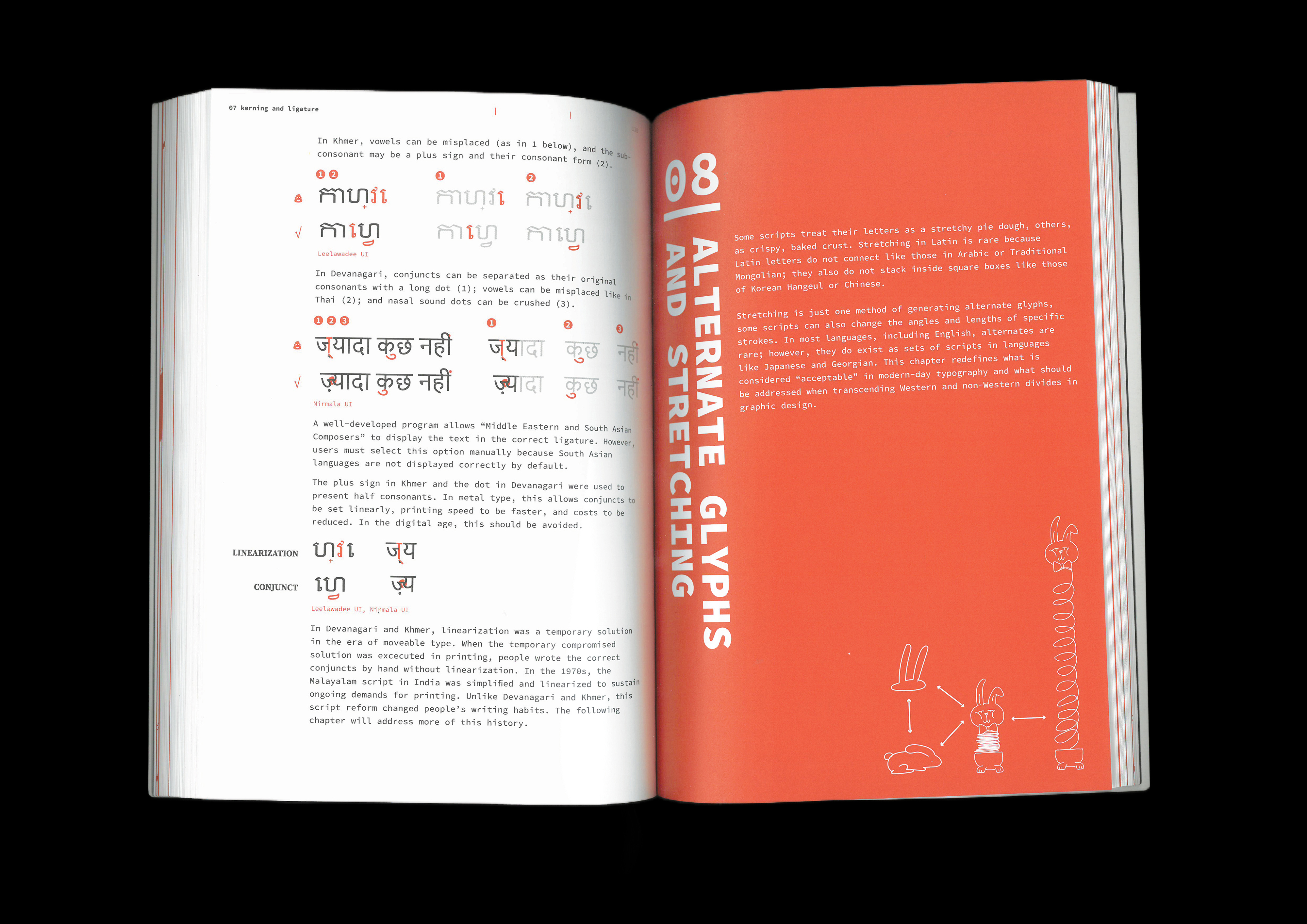
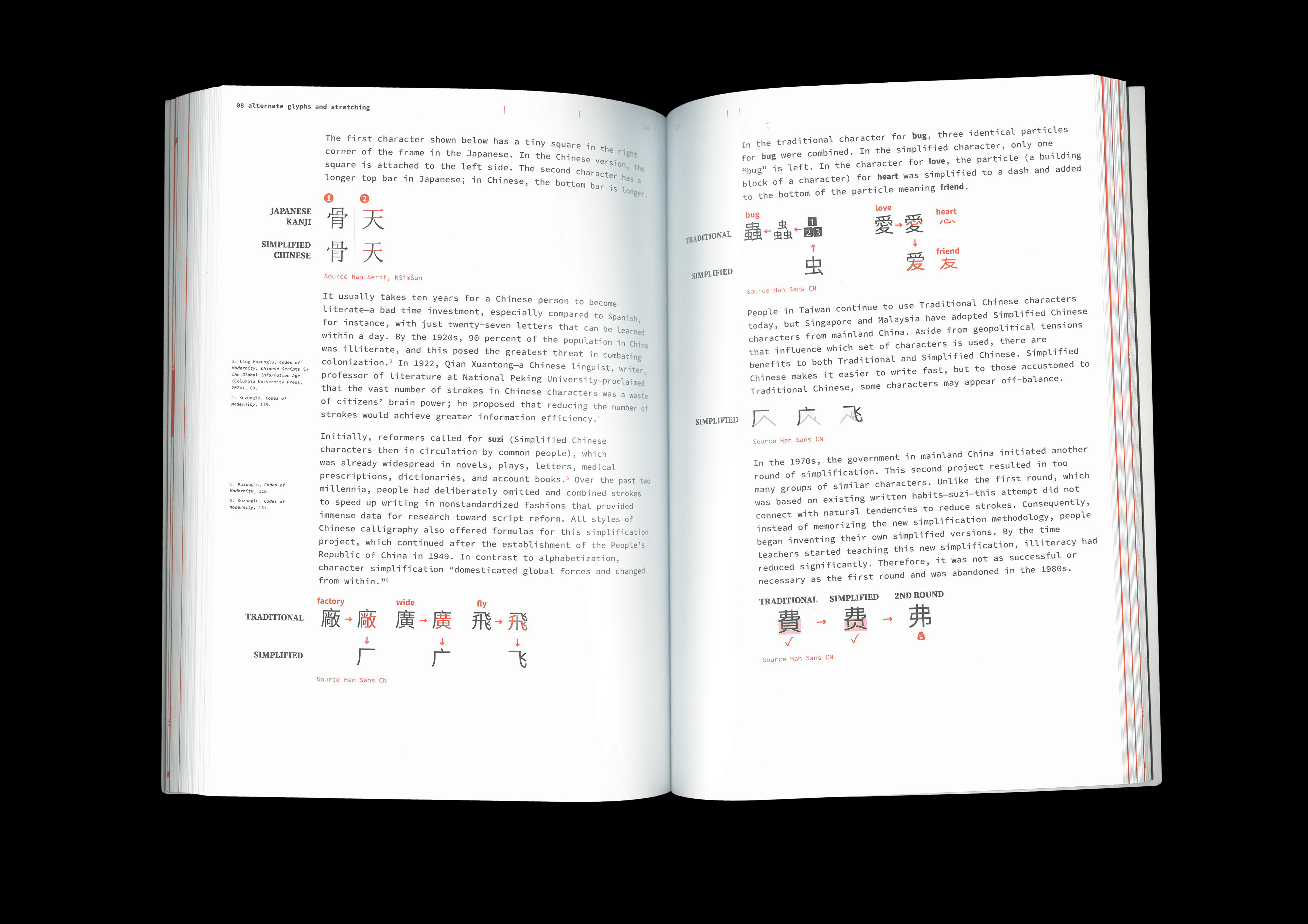
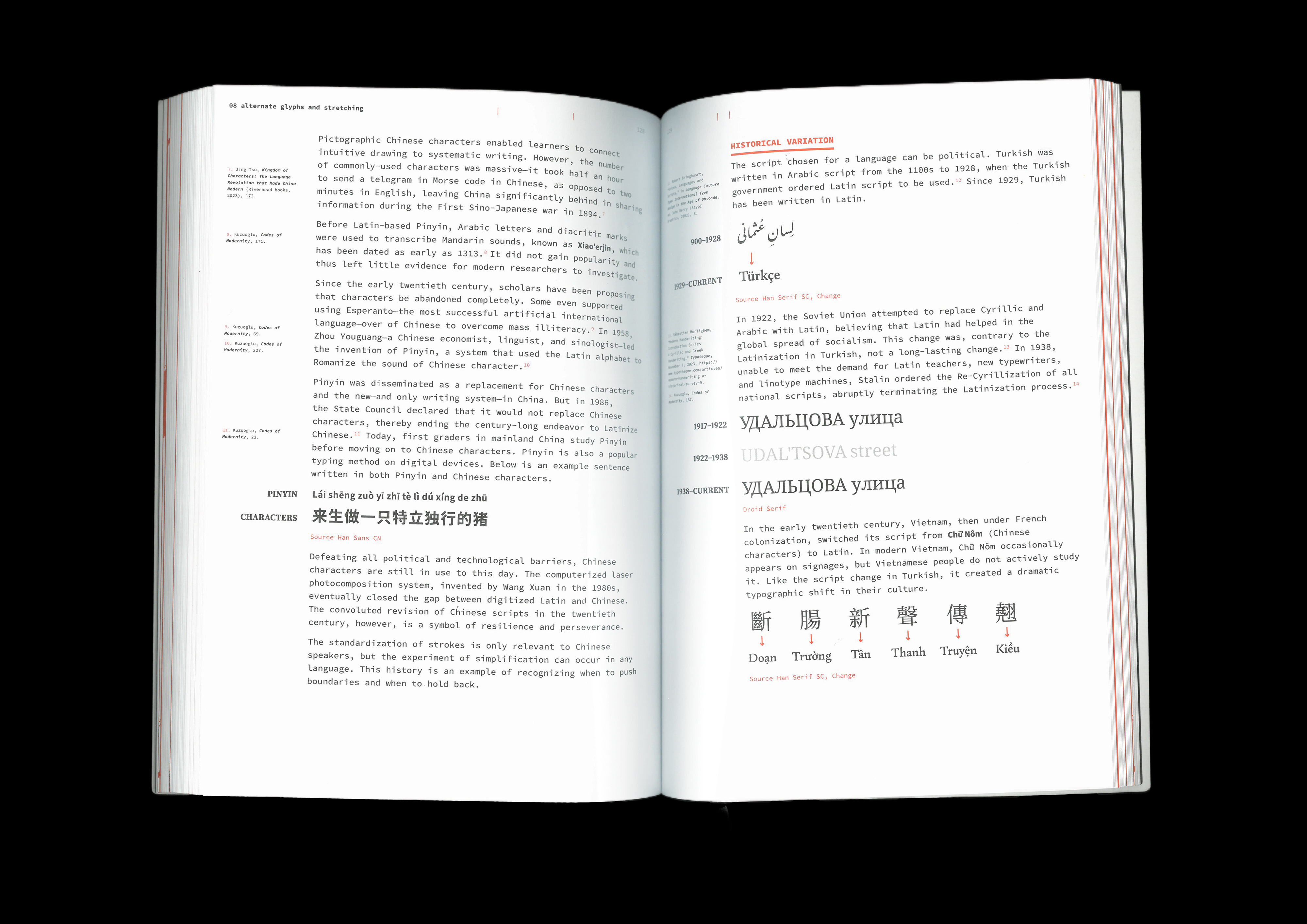
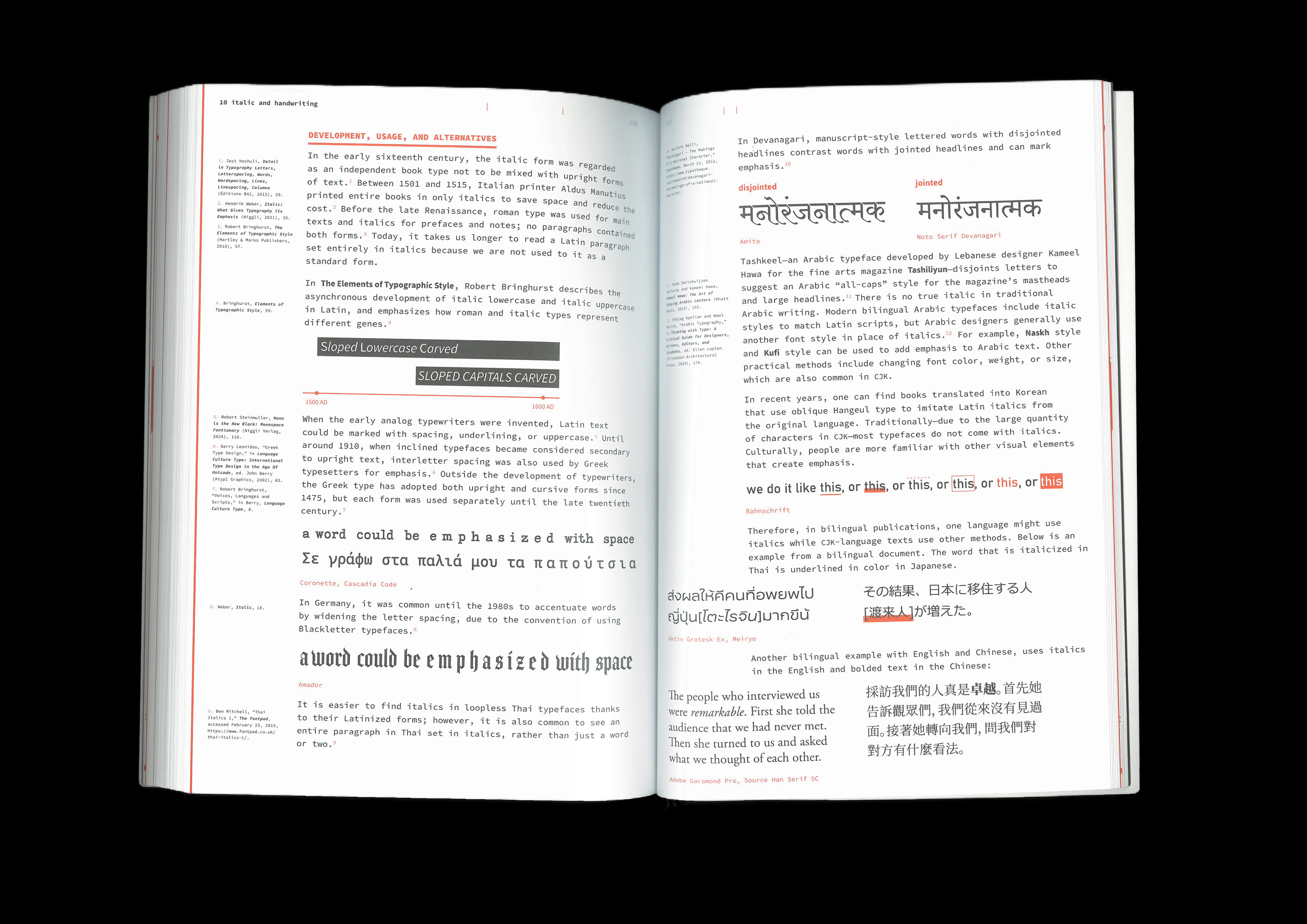
This book explores the unique typographic elements in non-Latin writing systems, and offers a new perspective on typography experimentation. To write and design the book, the author self-studied twenty non-Latin scripts. The typography research project spanned five years, excluding the prior twenty years of the author's exposure to multilingual communities.
Many of the minority scripts are used in countries that have been through colonization, war, conflicts, and climate disasters. However, they have thrived and will continue to thrive. Each surviving script serves as a storytelling vehicle for resilience, defiance, and social change.
As an educational resource, the project shines a light on the beauty and strength of non-Latin scripts. Unlike the encyclopedia approach, each chapter in the book presents a dialogue among scripts that transcend geographical proximities. All ten chapters enable the readers to see non-Latin letters as more than formal and cultural differences. Beyond typography and design, this project aims to prove that curiosity is the key to true inclusion.
The publication challenges the current Westernized typography education not by spotlighting new individual design concepts, but by analyzing the existing terminologies and their application to minority writing systems. Instead of offering direct solutions for decolonization and quotable statements, this book invites readers to question how daily Western design principles shape visual communication. It expands the understanding and empathy towards under-represented designers, and encourages minority script type designers to lead more conversations.