Money shouldn’t feel like the enemy. But for many, it does.
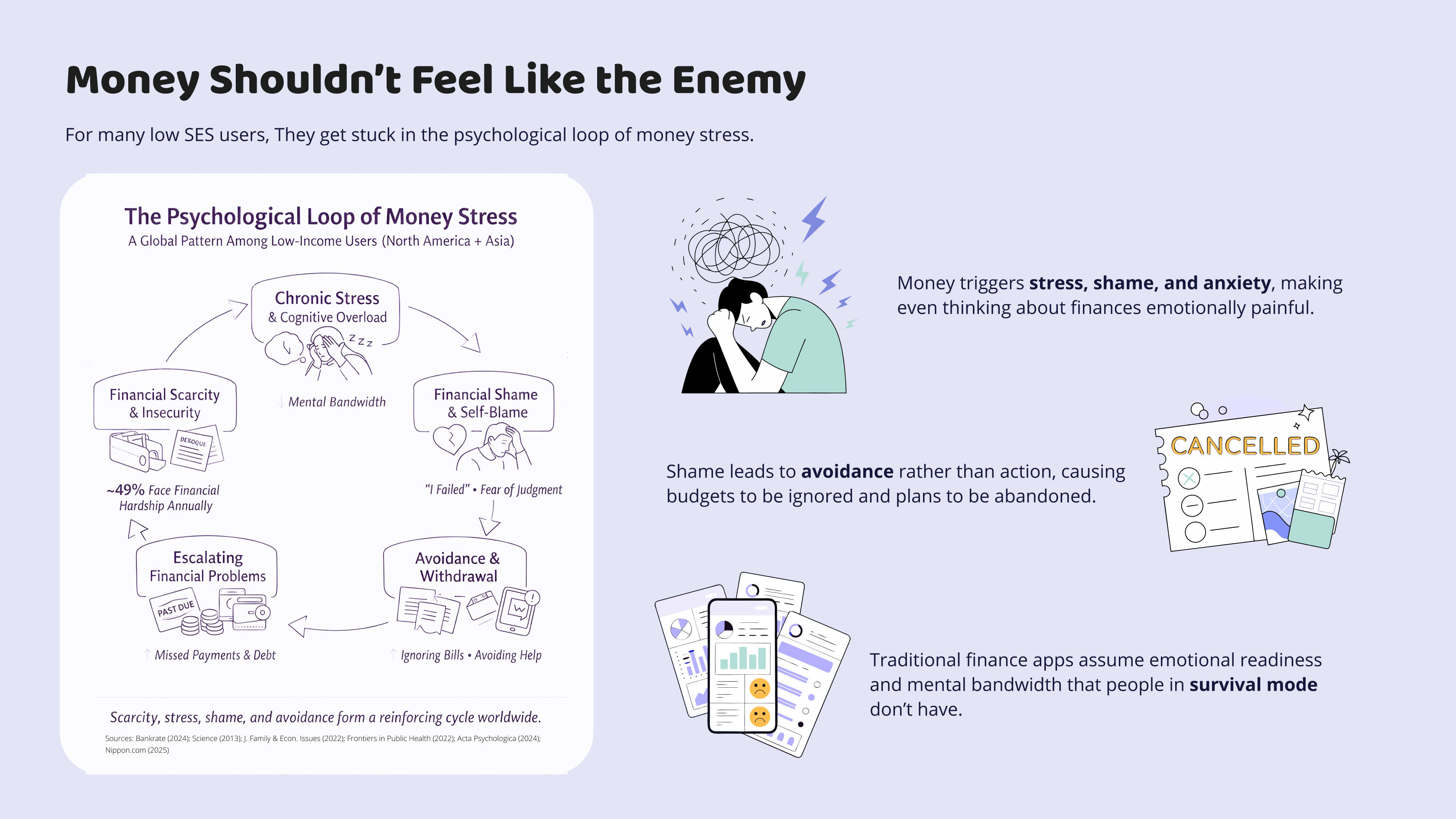
In low-income communities, stress, shame, and anxiety dominate most money conversations. Nearly two-thirds of people in low- to moderate-income households feel anxious just thinking about money, and over 40% report feeling shame when talking about it. That shame often leads to avoidance: bills go unopened, budgets ignored, plans abandoned. Traditional finance apps frequently fail this group because they assume time, mental bandwidth, and emotional readiness. For people living in survival mode, what’s needed isn’t more charts—it’s compassion.
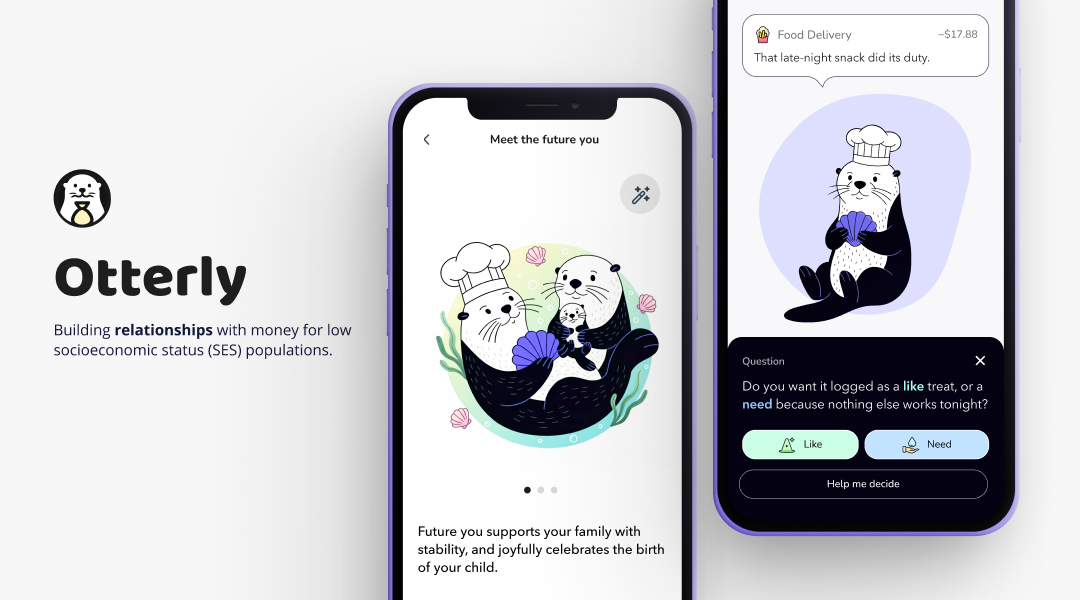
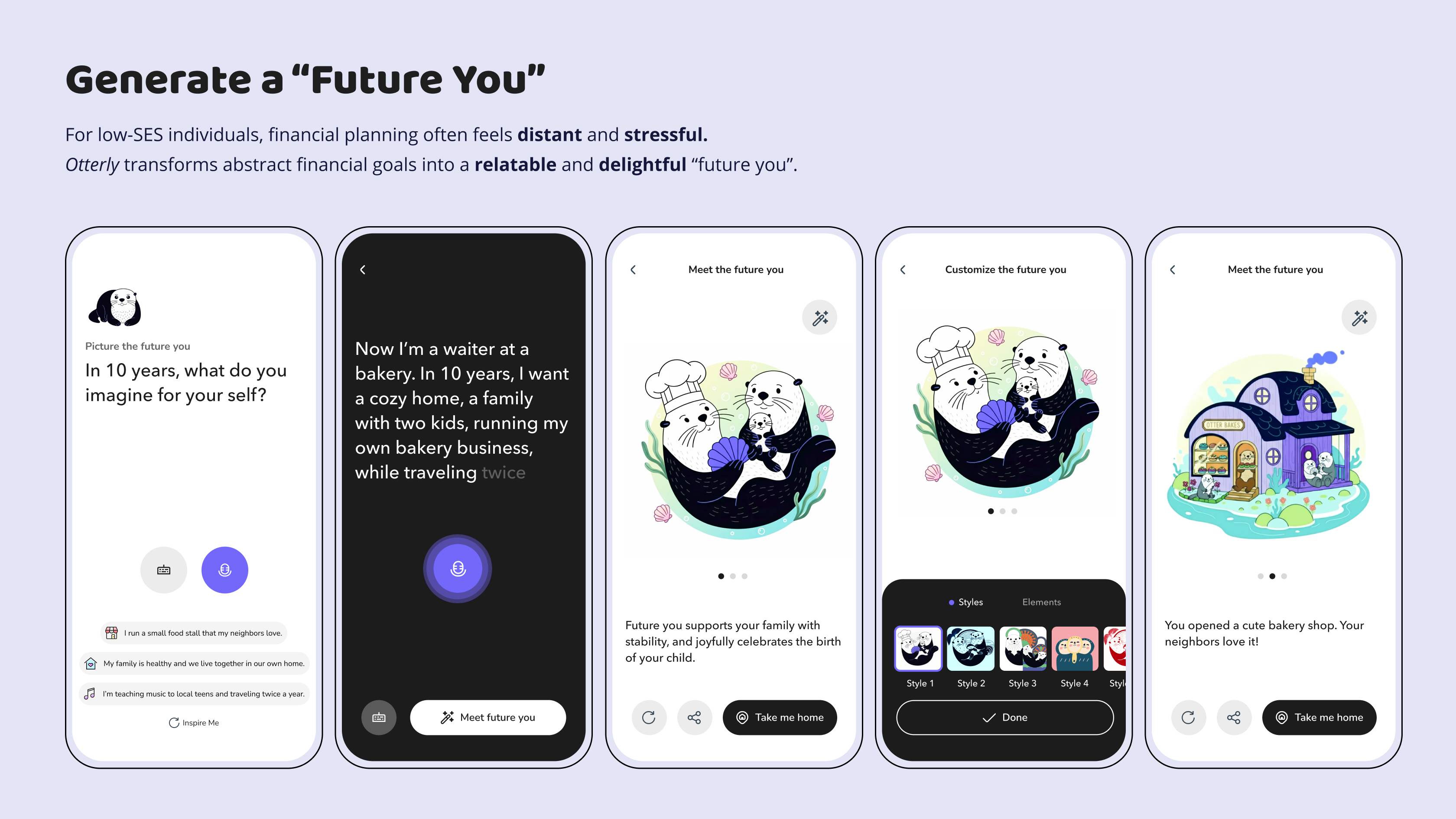
Designed for low-SES users, Otterly uses behavioral science and financial therapy to rebuild people’s relationship with money. At its core is the "Futrue Self"—a friendly otter avatar defined by users, evolving as they do, making long-term goals visual, playful, and personal.
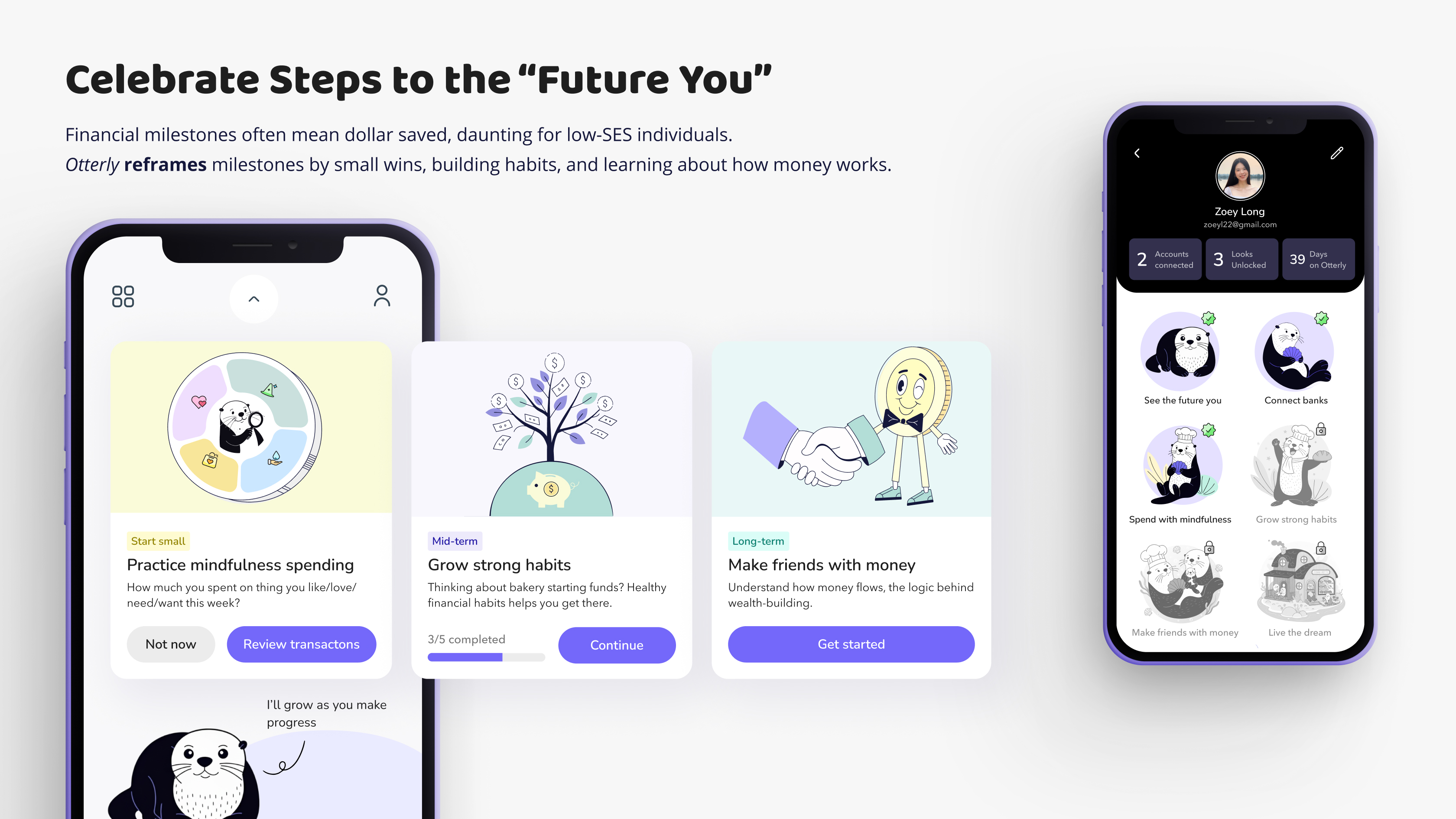
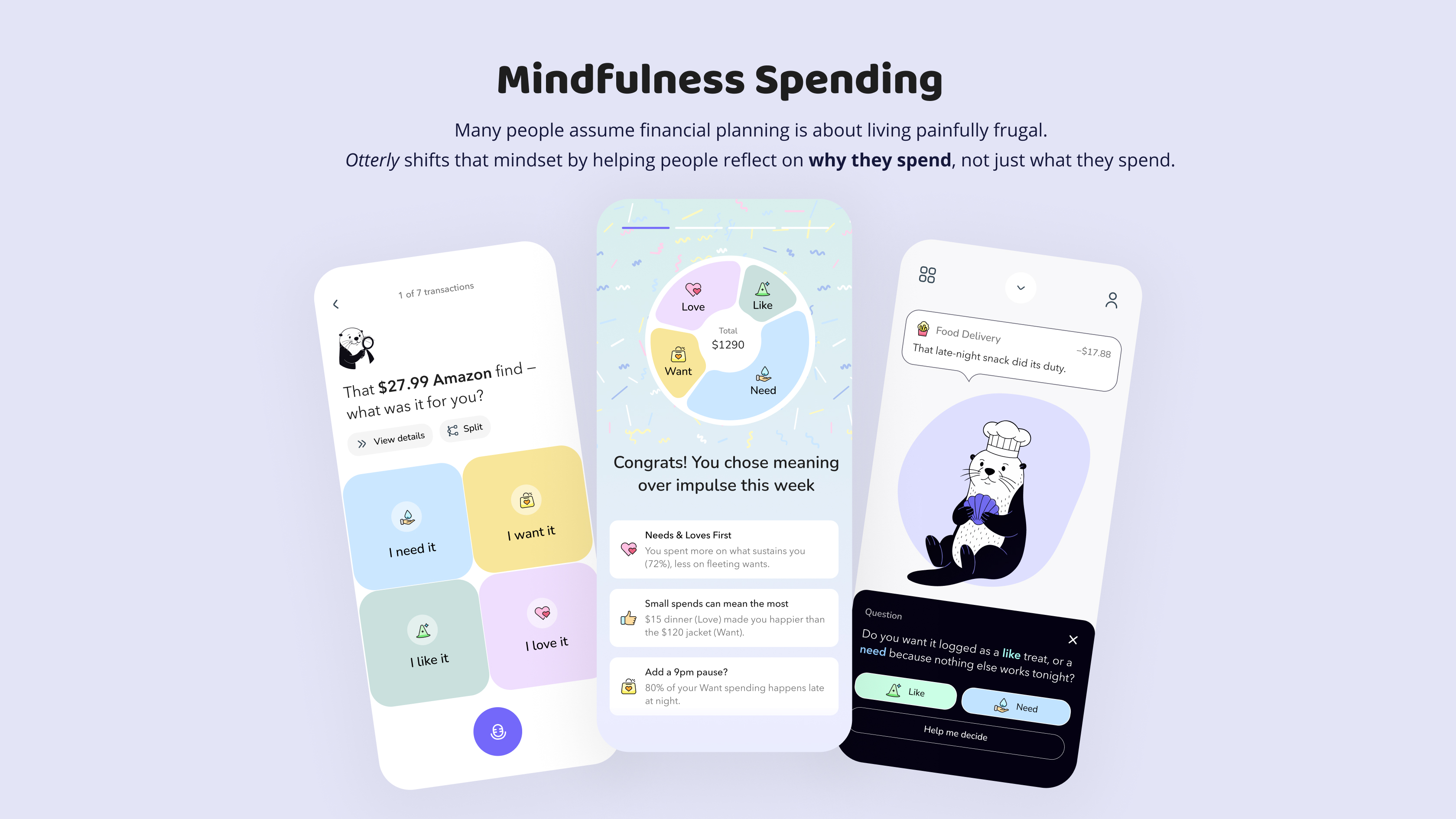
Instead of tracking dollars, Otterly celebrates behavioral wins. Progress in the app is measured by reaching behavioral milestones, bringing users closer to their Future Self. With the Mindfulness Spending Framework (Needs, Wants, Likes, Loves), users reflect on the why behind each purchase. It replaces guilt with awareness, helping people understand both their emotions and their spending patterns.
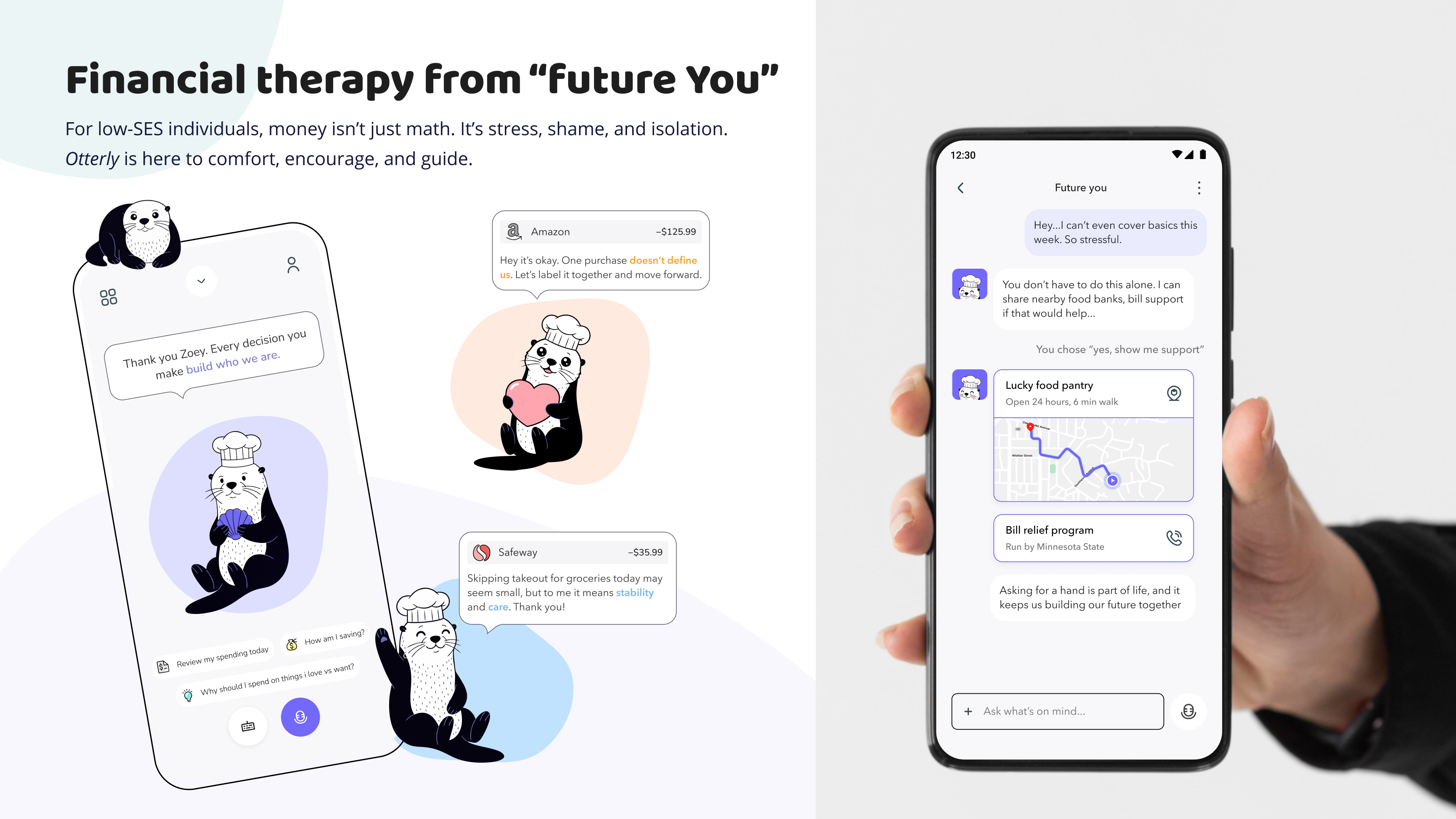
The Future Self chats with users daily, offering comfort, encouragement, and guidance. During tough times, Otterly gently shares local support options—such as food banks or bill assistance—without shame or judgment.
Otterly isn’t just a finance app—it’s a healing journey that makes money feel human again.